
10 Easy Sensory Bin Ideas for Preschoolers (Simple and Fun)
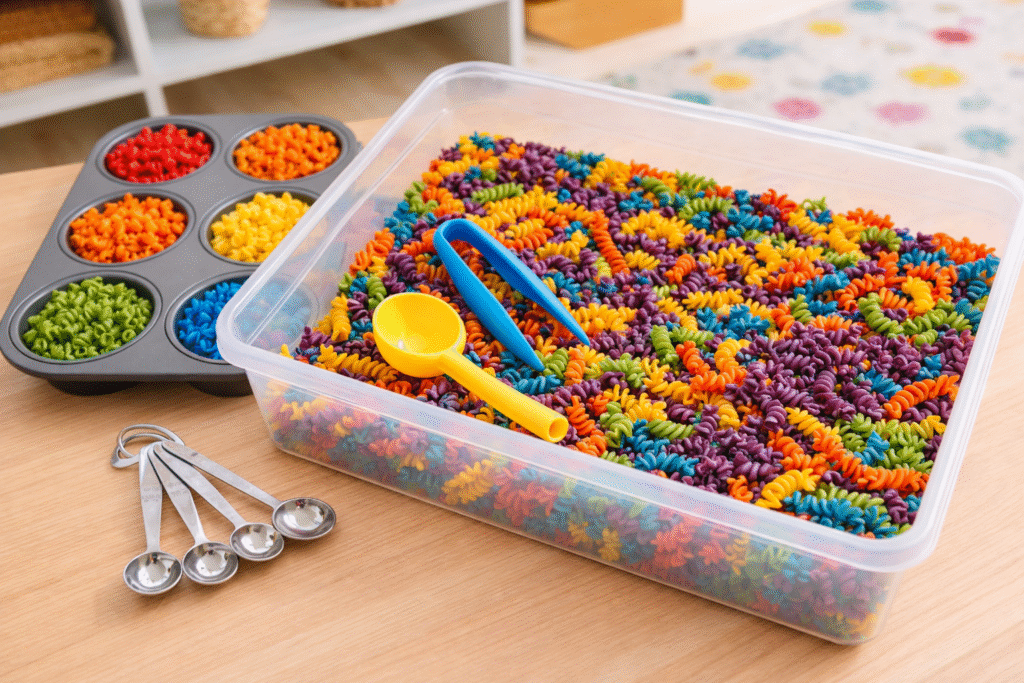
Looking for simple sensory activities you can set up quickly?
Sensory bins are one of the easiest ways to keep preschoolers engaged while supporting important early learning skills.
The best part? You don’t need fancy materials or complicated setups. Find a bin with sides to help keep the materials together, choose a filler, add some scoops and containers, and that’s it!
In this post, you’ll find easy sensory bin ideas you can put together using items you may already have at home or in your classroom.
If you’re new to sensory play you can read more about the benefits of sensory play here.
1. Rice Sensory Bin
- Filler: Dry rice
- Add: Cups, scoops, small containers
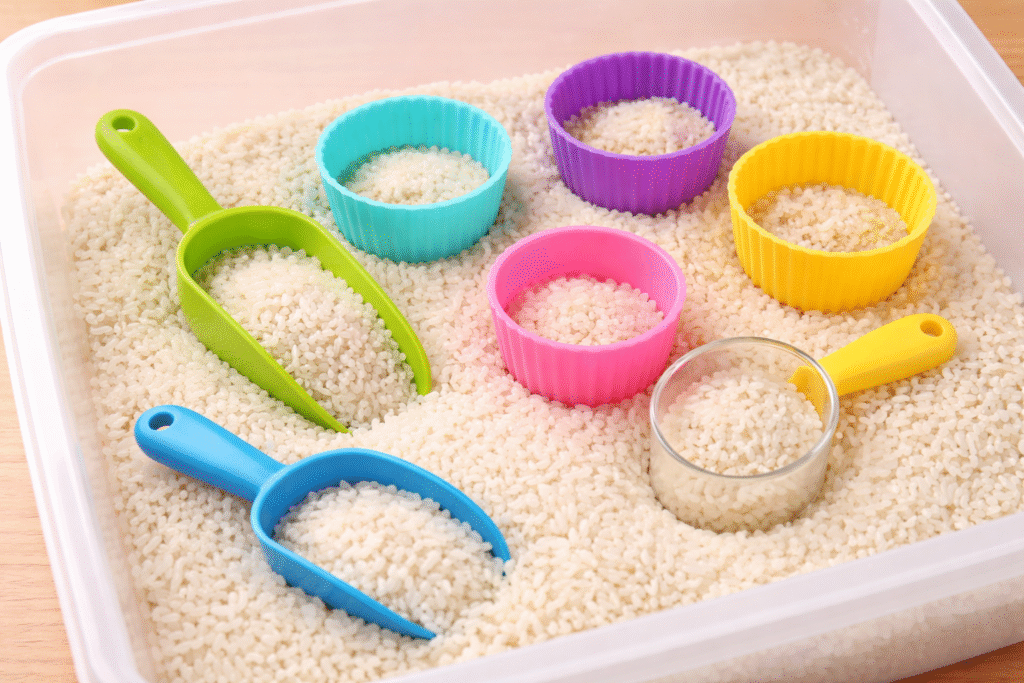
This is a great beginner bin. It’s simple, calming, and easy to clean up.
2. Bean Sensory Bin
- Filler: Dry beans (any kind)
- Add: Measuring cups, spoons
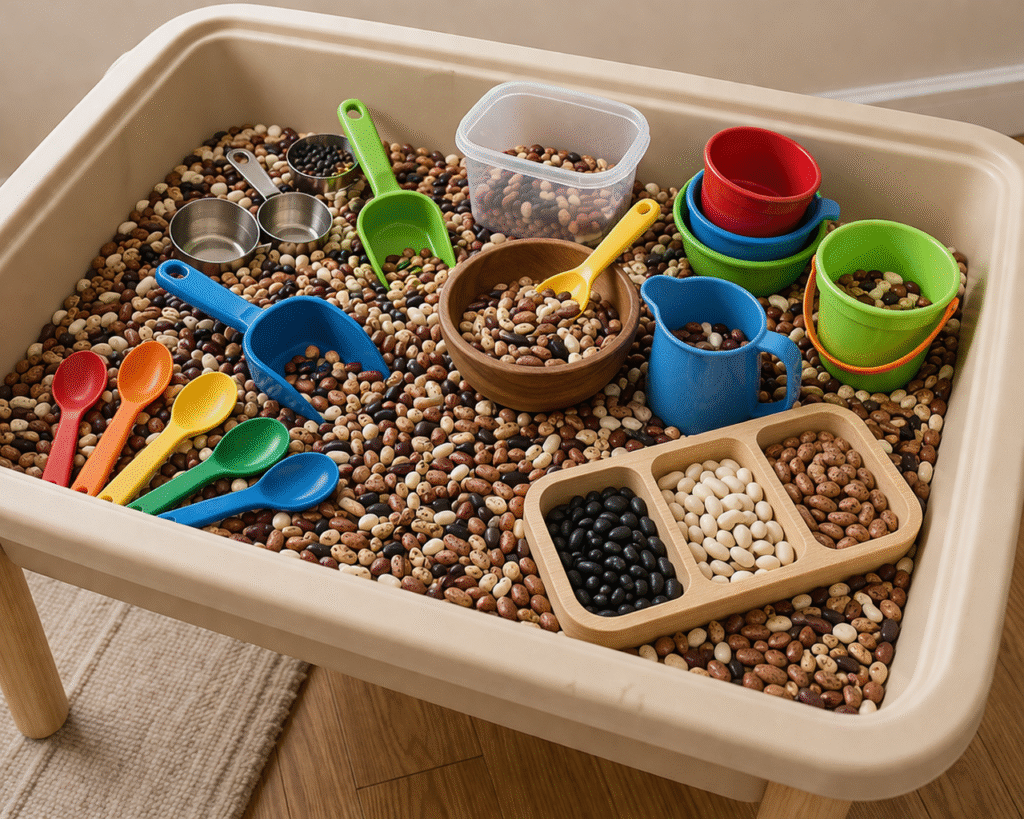
Perfect for scooping, pouring, and building fine motor skills.
3. Pasta Sensory Bin
- Filler: Dry pasta (any shape)
- Add: Tongs, cups, bowls
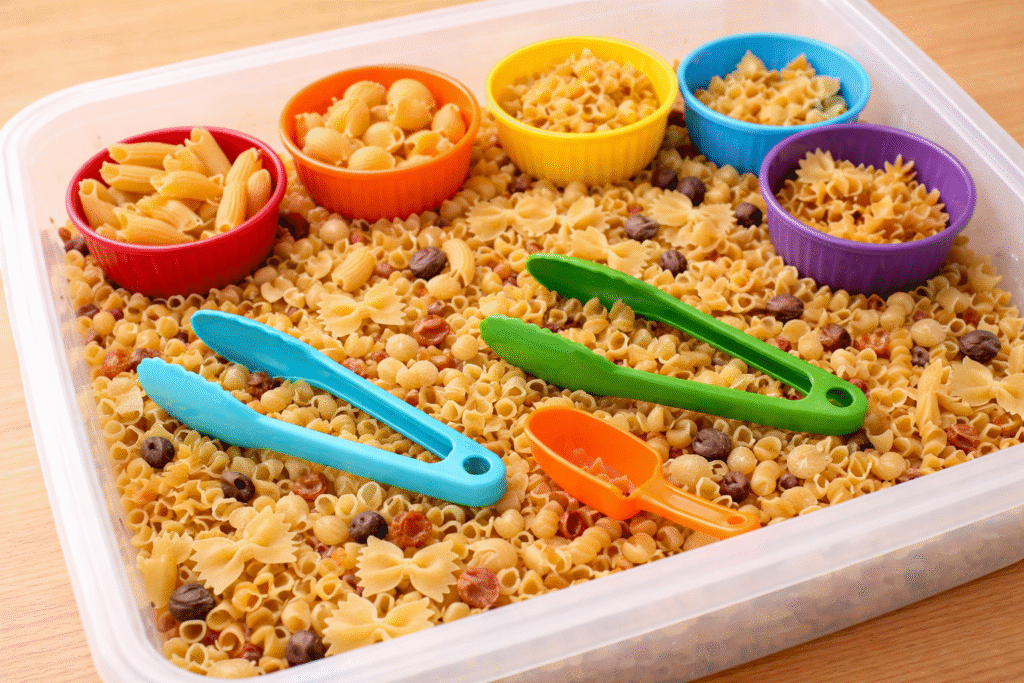
You can even dye pasta for added color and fun.
4. Water Sensory Bin
- Filler: Water
- Add: Cups, funnels, small toys
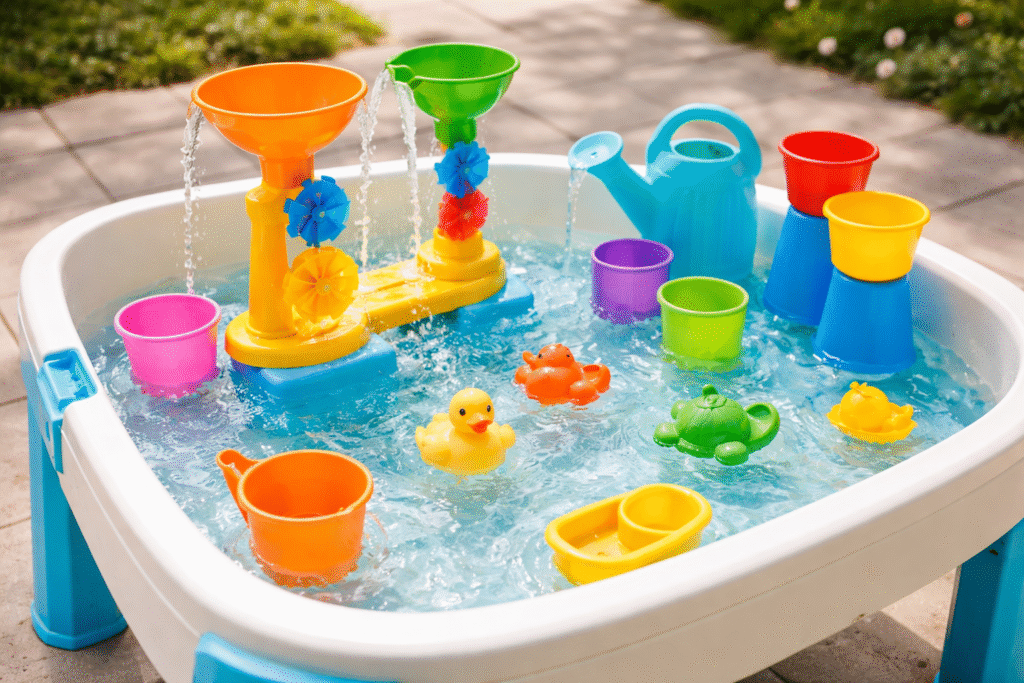
A favorite for most children—great for warm days or outdoor play.
5. Sand Sensory Bin
- Filler: Sand (store-bought or kinetic)
- Add: Scoops, molds, small trucks
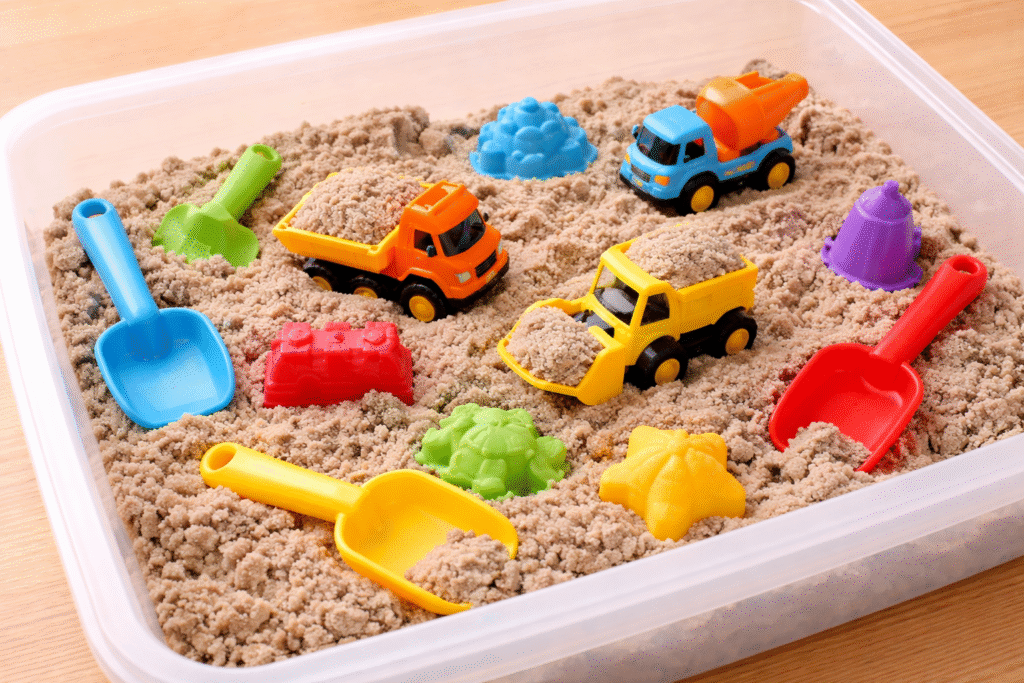
Encourages digging, building, and imaginative play.
6. Cornmeal Sensory Bin
- Filler: Cornmeal
- Add: Cups, spoons, small toys
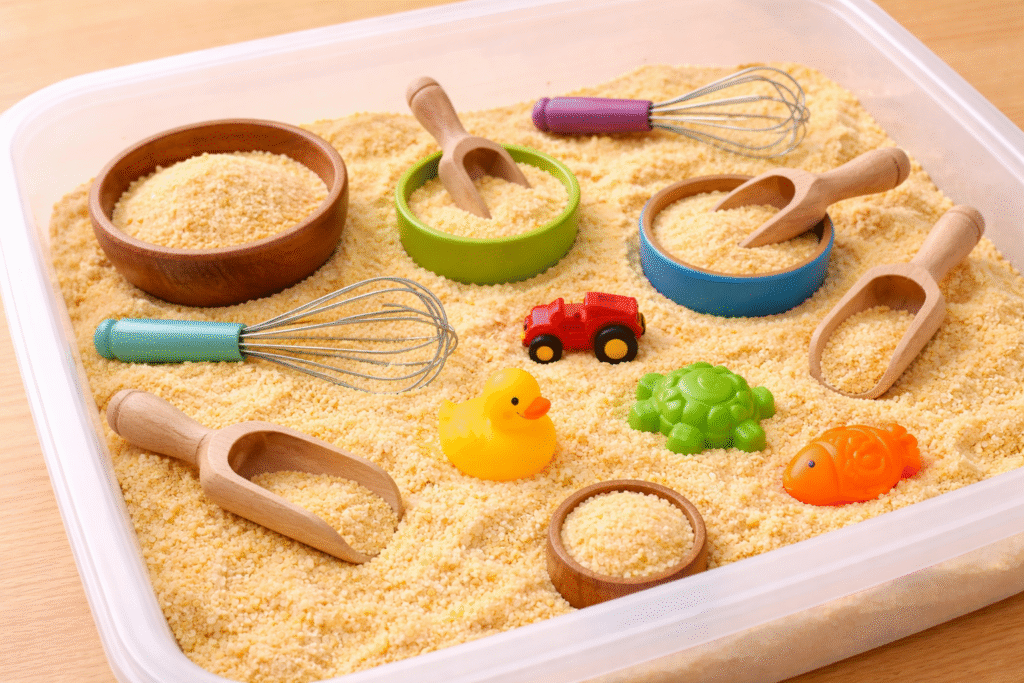
Soft and smooth—great for a different texture experience.
7. Ice Sensory Bin
- Filler: Ice cubes
- Add: Cups, droppers, spoons
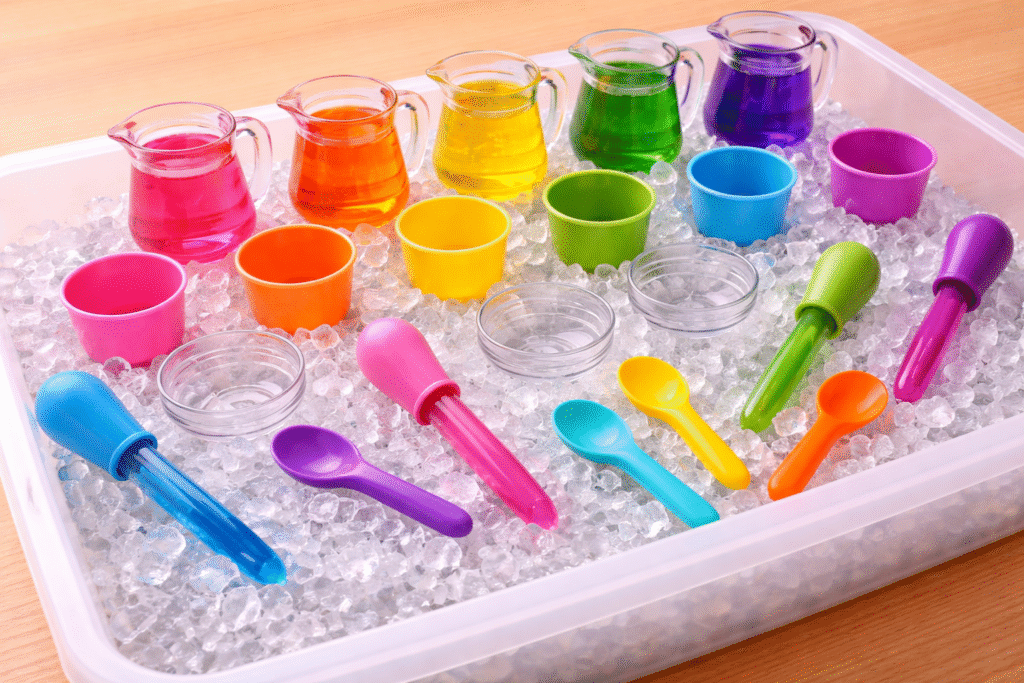
Fun for exploring temperature and melting.
8. Shredded Paper Bin
- Filler: Shredded paper
- Add: Small toys or hidden objects
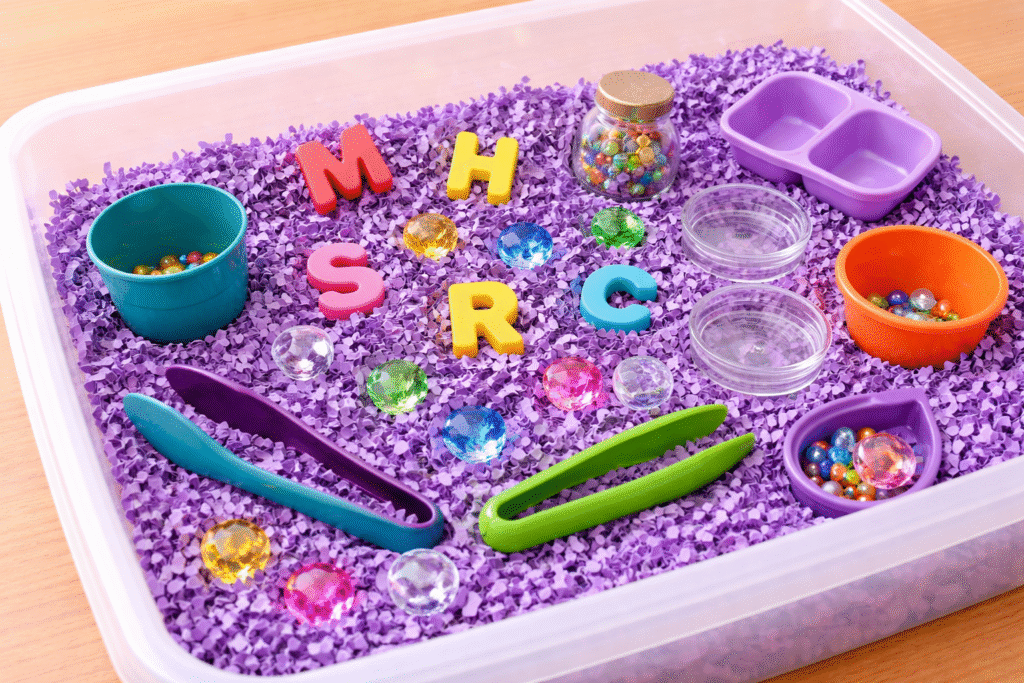
Great for digging and “treasure hunts.”
9. Pom Pom Sensory Bin
- Filler: Pom poms
- Add: Tongs, cups, muffin tins, or ice cube trays for sorting
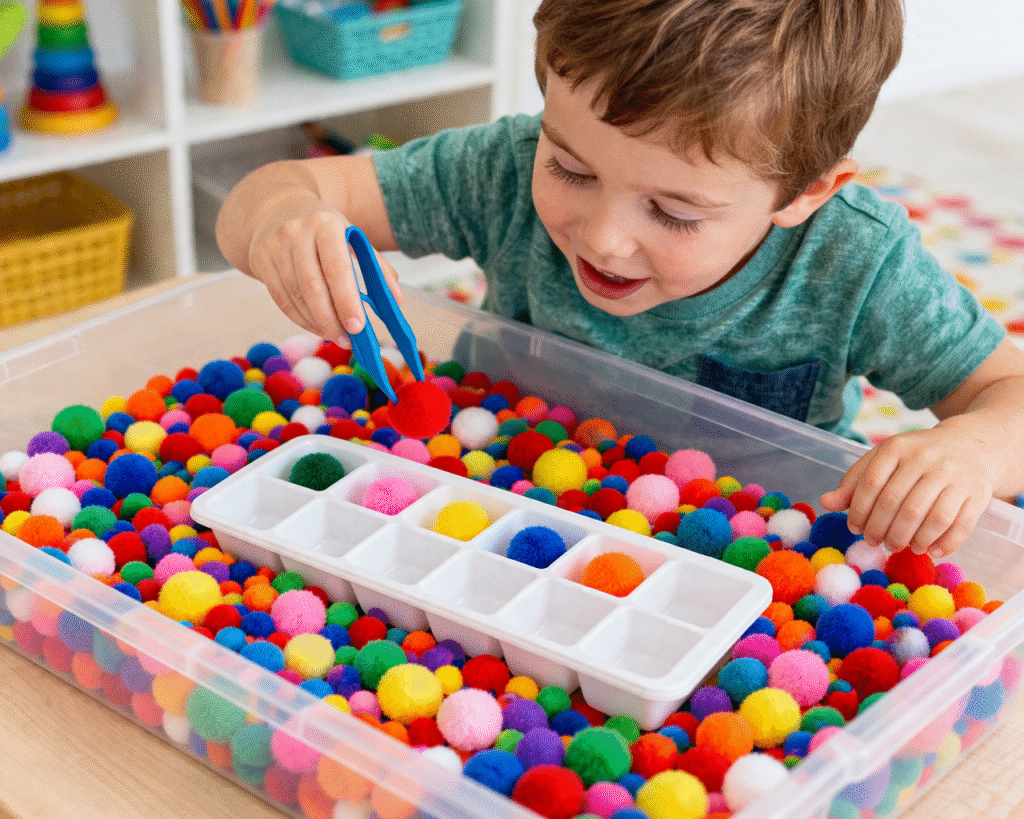
Perfect for sorting and fine motor practice.
10. Dirt or Nature Bin
- Filler: Dirt or soil
- Add: Leaves, sticks, rocks
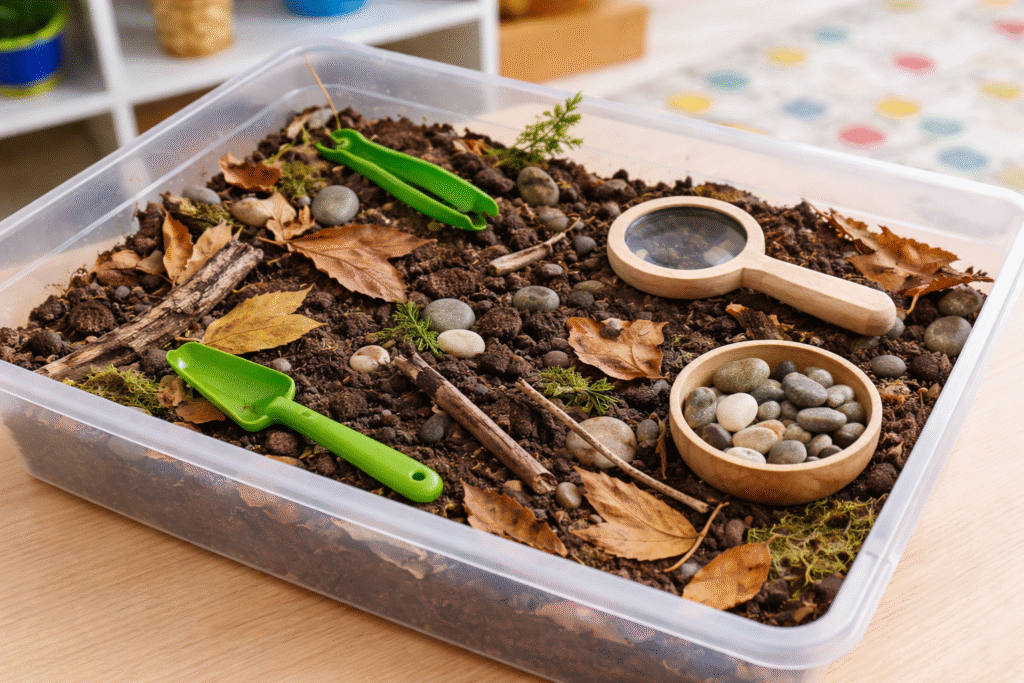
Messy—but incredibly engaging and connected to real-world play.
Tips for Keeping Sensory Play Simple
If you’re just getting started, keep it easy:
- Start with one filler and a few tools
- Skip themes at first. Themes can come later.
- Use a tray or mat underneath
- Keep expectations simple
You don’t need to do everything at once.
What Skills Are Kids Learning While They Play?
Even simple sensory bins support important skills:
- Fine motor development
- Focus and attention
- Creativity
- Early math concepts like measuring and volume
👉 You can read more about the benefits of sensory play here.
Start with Just One
If this feels like a lot, start small.
Choose one idea—like a simple rice bin—and see how your child responds.
You can always add more later.
Sensory play doesn’t have to be complicated to be meaningful.