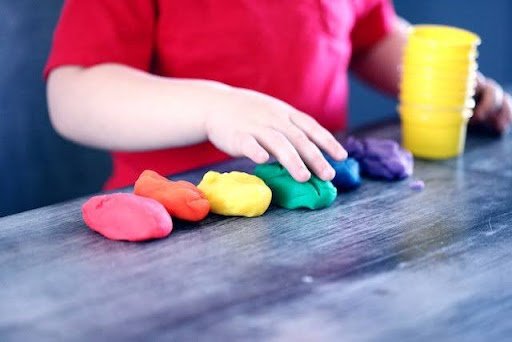
Playdough is one of the most powerful tools in a preschool classroom—and when it’s teacher-led with intention, it becomes even more impactful. These playdough fine motor activities for preschool are designed to help children strengthen their hands while learning simple, foundational skills they can build on over time.
Instead of just handing out playdough, you can guide children through simple movements that build the small muscles in their hands—the same muscles they need for writing, cutting, and everyday tasks.
The following is a simple, developmentally appropriate sequence you can use during small group or whole group instruction. It’s my favorite way to start off the school year. Once children learn these basic skills, they can start using playdough with purpose—helping them practice letters, numbers, shapes, and early writing skills in a fun and hands-on way.
Start with the Basics: Making a Ball
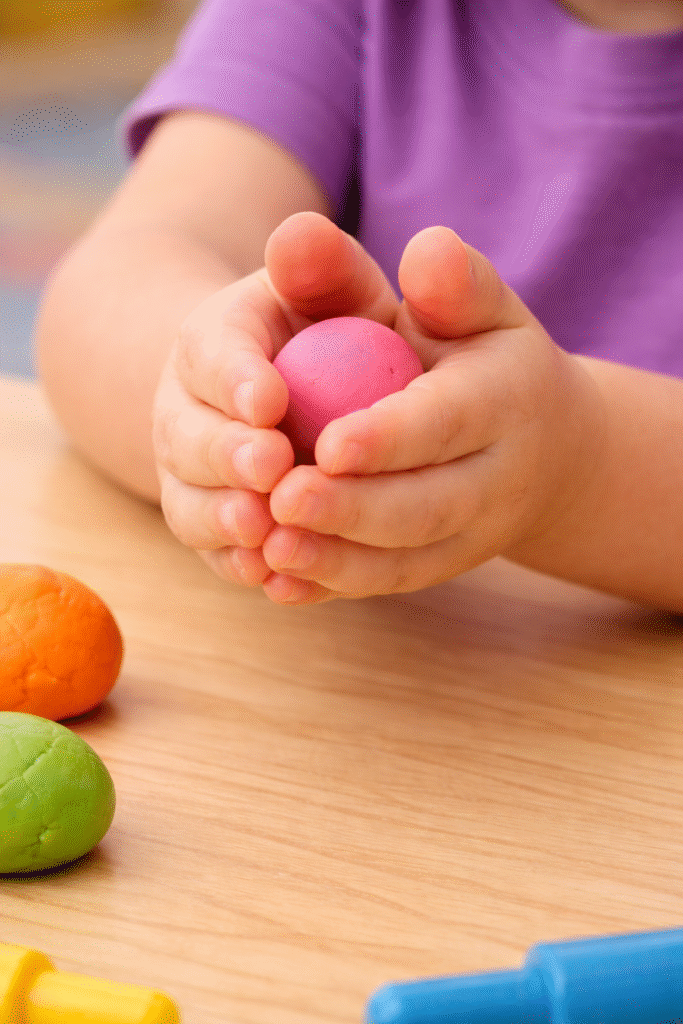
Teacher Language:
- “Let’s make a ball.”
- “Put your playdough in your hands.”
- “Roll, roll, roll…”
- “Keep your hands together.”
This motion strengthens both hands working together and builds coordination.
Flatten into a Pancake
Once children can form a ball, guide them to flatten it into a pancake.
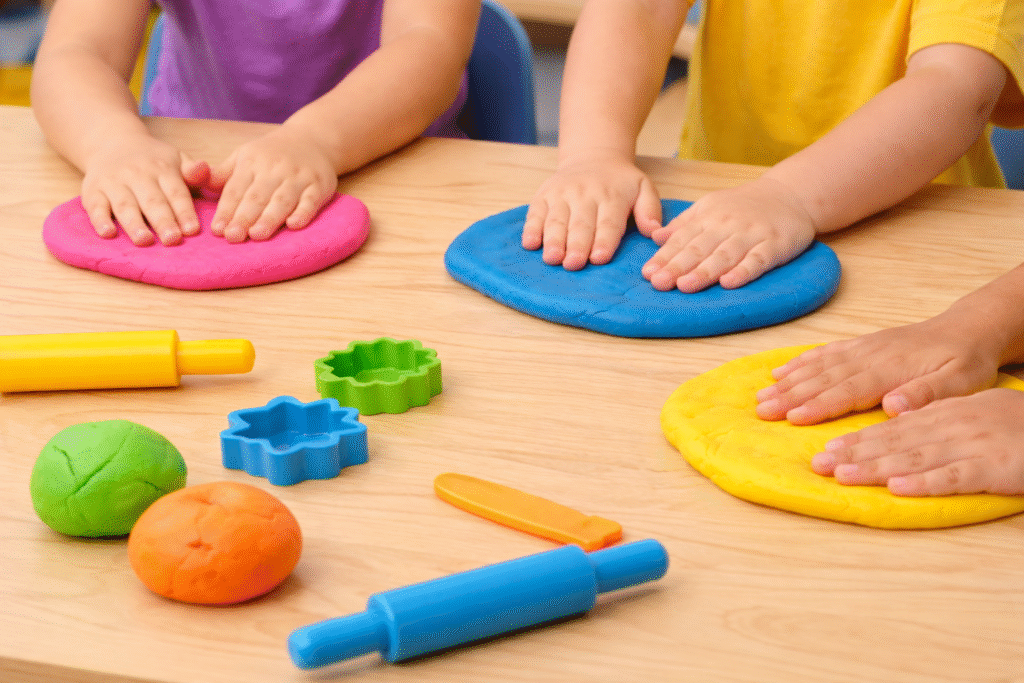
Teacher Language:
- “Now let’s squish it!”
- “Push down with your hand.”
- “Flat like a pancake!”
This introduces hand strength and control through pressing and flattening.
Fold into a Taco
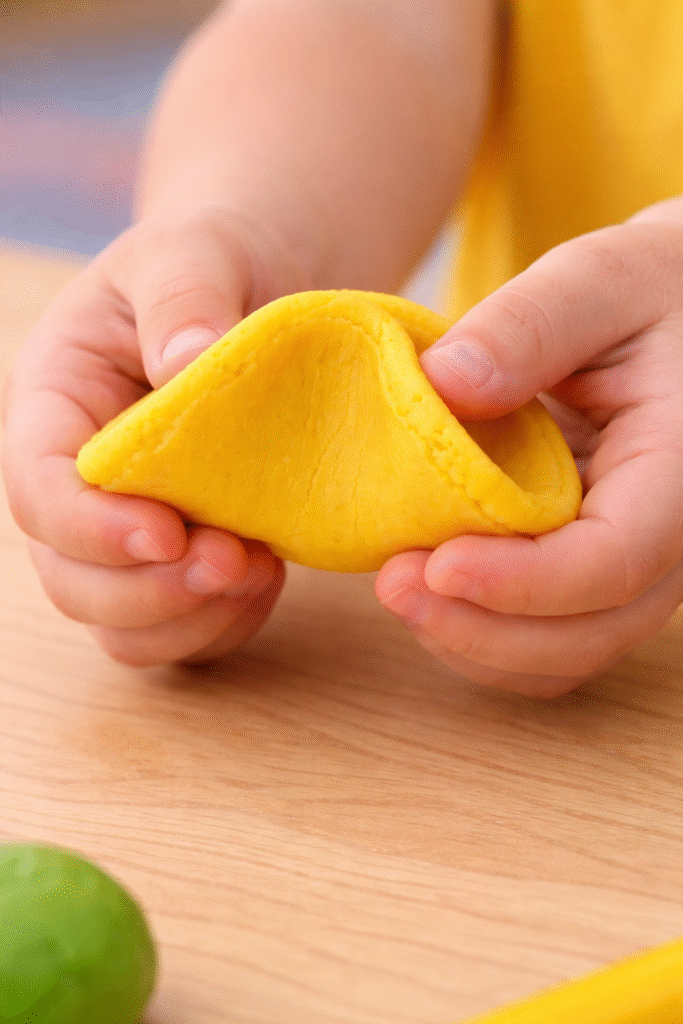
Now add a simple transformation: folding.
Teacher Language:
- “Let’s fold it in half.”
- “Now it looks like a taco!”
- “Open and close your taco.”
This builds coordination and introduces early concepts like half and fold.
Roll into a Burrito
Next, encourage children to roll their pancake into a burrito (log shape).
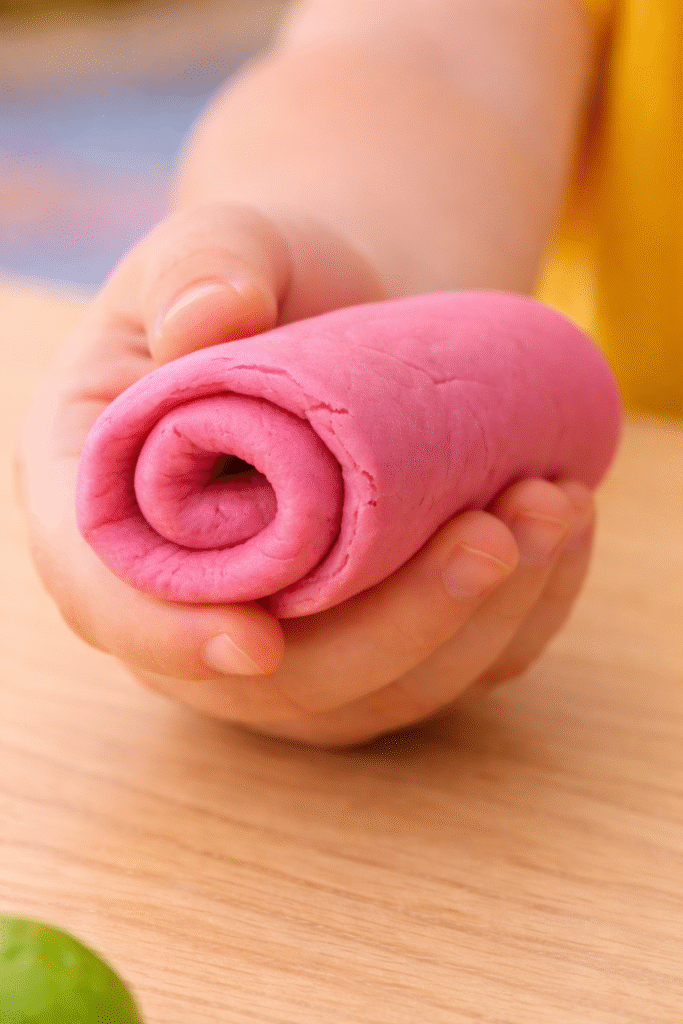
Teacher Language:
- “Start at one side… roll it up.”
- “Keep rolling… make a burrito!”
- “Use your fingers to help.”
This helps strengthen fingers and introduces controlled rolling.
Make a Snake (Rolling Back and Forth)
Now move to a more advanced skill: rolling a snake.
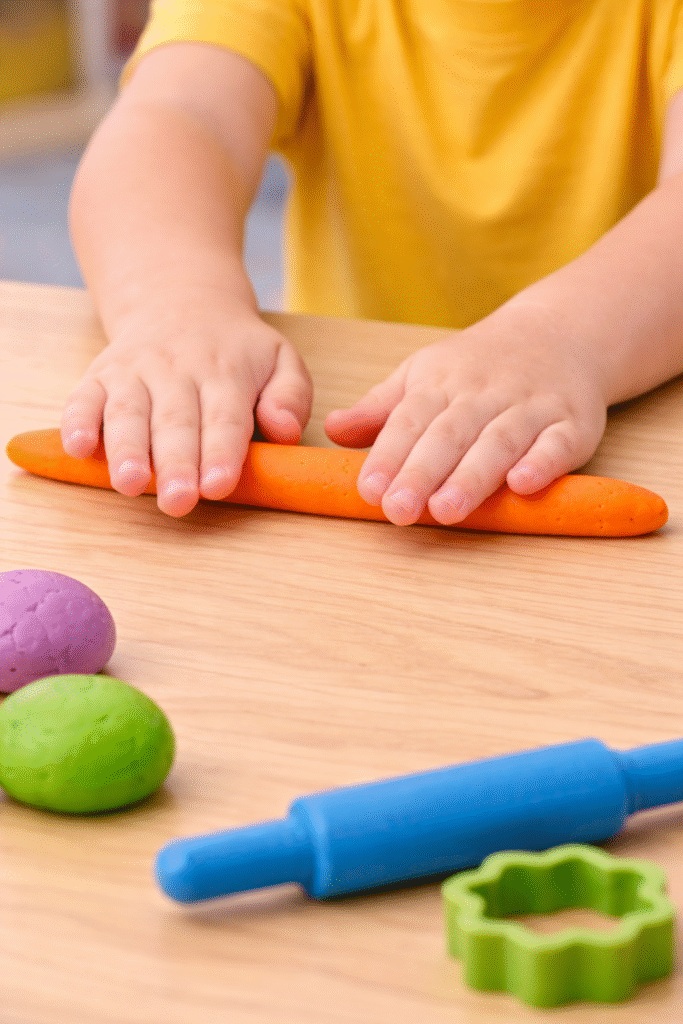
Teacher Language:
- “Put your hands on the table.”
- “Roll back and forth.”
- “Make it longer… and longer!”
This is a key fine motor movement that builds endurance and coordination.
Build on Skills: Small Balls for Squish Activities
Once children can roll small balls, you can extend learning into squish or smash activities.
Try this:
- Roll small balls
- Place them on the table
- Use fingers to squish them one at a time
Teacher Language:
- “Let’s make tiny balls.”
- “Now squish with one finger!”
- “Press… and pop!”
This strengthens individual fingers—important for pencil grip later on.
From Snakes to Shapes and Letters
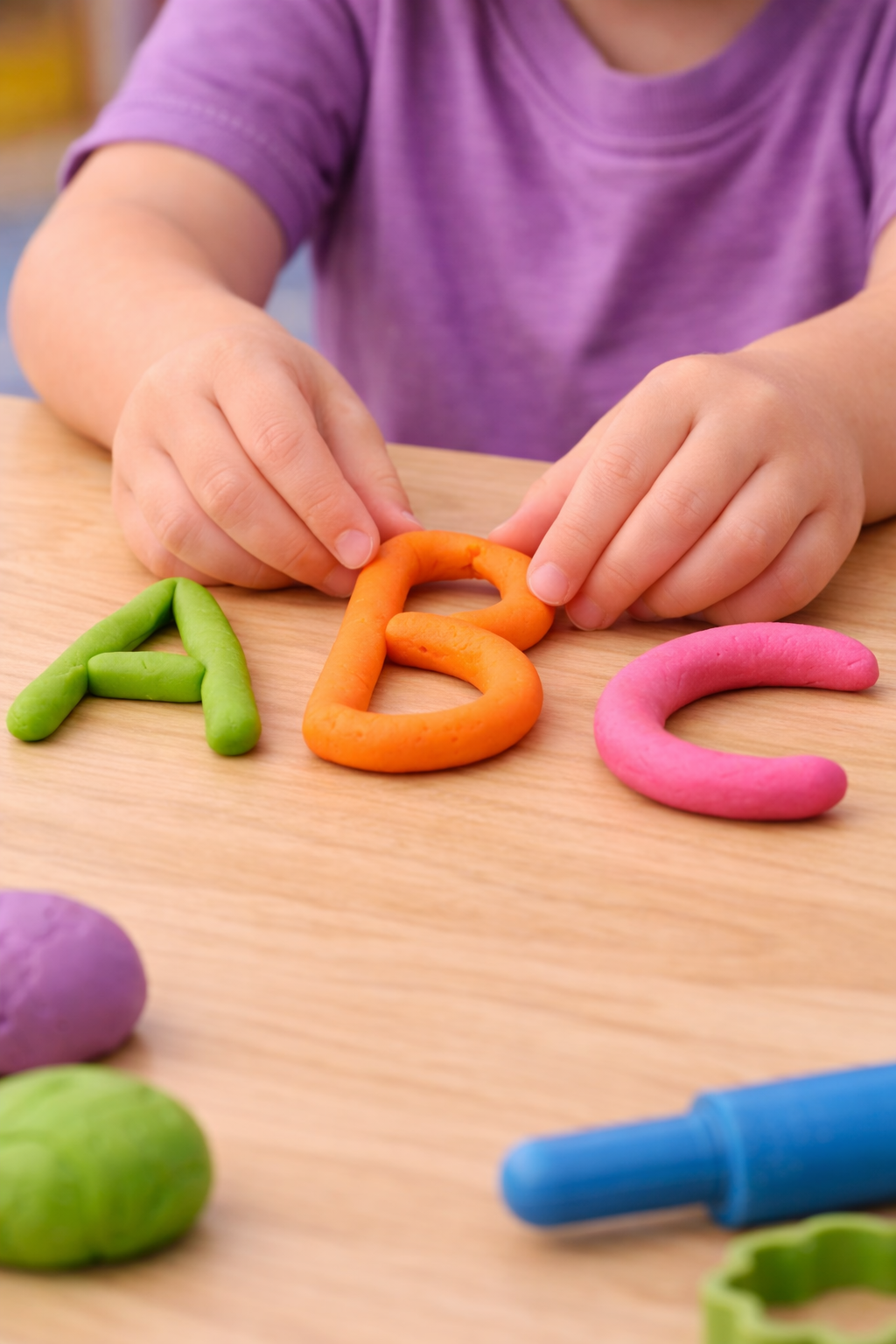
When children are comfortable making snakes, they are ready for the next step: forming shapes and letters.
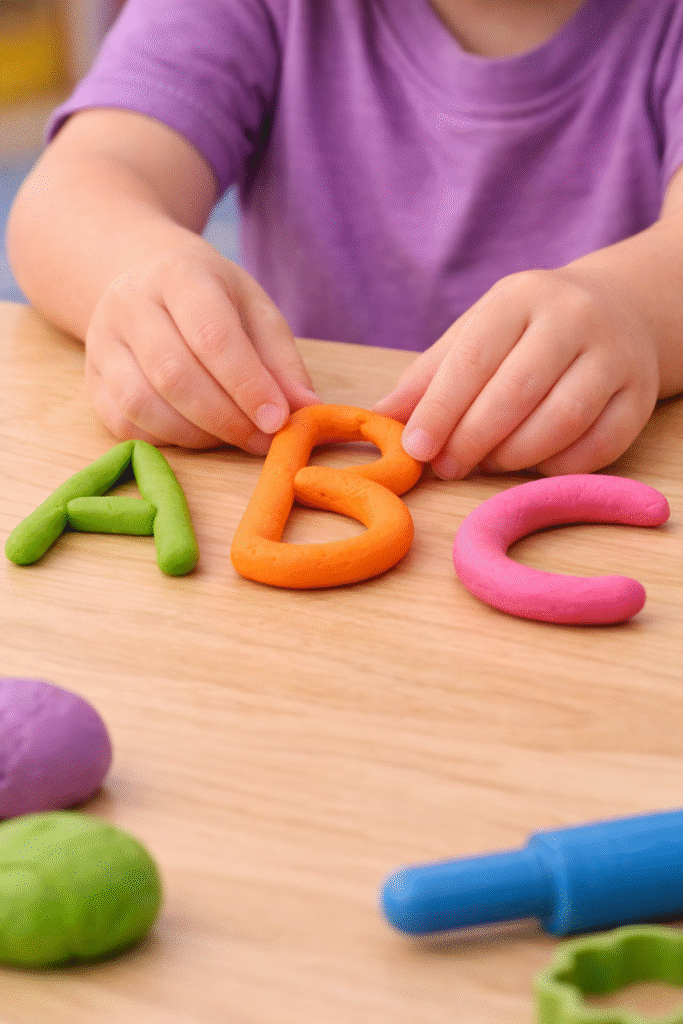
Try this:
- Curve snakes into circles, squares, and triangles
- Form simple letters (like L, T, O)
Teacher Language:
- “Can you bend your snake into a circle?”
- “Let’s make a letter!”
- “Curve it… turn it…”
This is where fine motor play connects directly to early literacy skills.
Why This Matters
These simple playdough movements help children:
- Strengthen hand muscles
- Improve coordination
- Build control needed for writing
- Develop confidence through guided success
And best of all—it still feels like play.
Simple Tip for Teachers
You don’t need complicated setups.
Just sit with your students, model each step, and use clear, simple language. Repeating the same sequence regularly helps children build skills over time.