This post contains Amazon affiliate links. As an Amazon Associate I earn from qualifying purchases, at no extra cost to you.
After 20+ years in early childhood classrooms (preschool through first grade), I can tell you the families who walk in calm on day one aren’t the ones with the fanciest supplies. They’re the ones who spent a few weeks before school started building small, boring, repeatable routines. That’s really what this post is about: what actually helps, not what looks good in a first-day photo. Although those photos are adorable!
Start the Routine Before the First Week
The single biggest thing you can do in the next few weeks has nothing to do with shopping — it’s practicing the actual school-day rhythm at home. Wake-up time, breakfast, getting dressed, out the door. Kids (and parents too) do so much better on day one when the schedule isn’t brand new.
A simple visual routine chart makes this concrete for little ones who can’t read a clock yet. It’s not a magical fix-all, but when your child knows what to expect, it really helps with the transitions. Eventually the mornings get easier — most of the time — and there’s less rushing and resistance. Here’s my favorite…
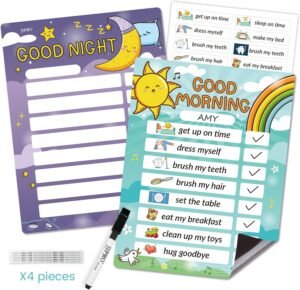
Routine Chart – for morning and night!
This is the one I actually recommend — it’s simple, magnetic, and sticks right to the fridge without taking up much space. Unlike routine charts with loose magnetic pieces that get lost or moved to the wrong spot, this one stays clear and organized. It’s sized just right for little hands, easy to adjust as your routine changes, and there’s no extra clutter competing for your child’s attention — just the tasks that matter.
Set Tomorrow Up Tonight
The night-before routine matters just as much as the morning one. Making little decisions ahead of time like, what to wear, what’s for breakfast helps the morning run smoothly. If you’ve got a little one who likes to choose their own clothes, it can become an unnecessary battle when everyone’s rushing and still half-asleep. Make those decisions the night before, and make it non-negotiable: once the outfit’s chosen, that’s it. No changes in the morning… unless it’s grabbing an extra sweater.
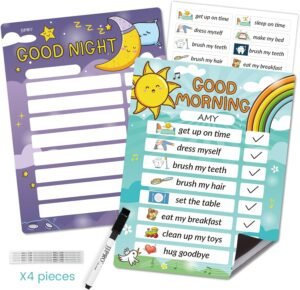
Routine Chart – Sun and Moon
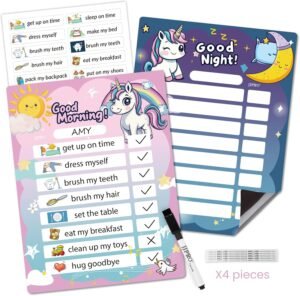
Routine Chart – Unicorns
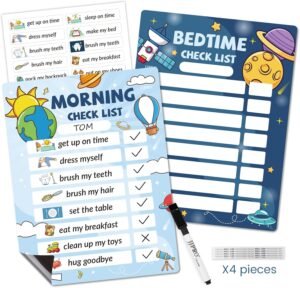
Routine Chart – Space
This same routine chart comes in a few different looks — pick whichever style your family will actually enjoy using every day.
Supplies That Actually Work for Little Hands
Not every “school supply list” item is created equal. A few things consistently make a real difference in preschool, K, and 1st grade classrooms.
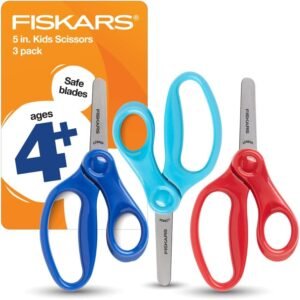
Fiskars Scissors, Blunt Tip
Fiskars is my favorite brand. Consistently easy to open and close. Best for young children.
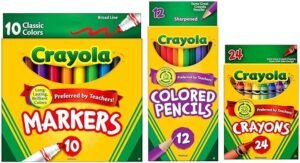
Crayola Markers, Colored Pencils, and Crayons
Please please always choose Crayola. The quality is just better. Less frustration for the little ones!
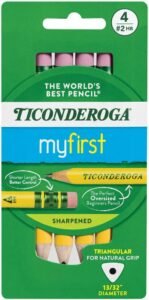
Ticonderoga Pencils
These are shorter for better fine motor control for the little ones, whatever size you choose, go with Ticonderoga!
A Little Comfort Goes a Long Way
Especially for preschool and K, the first weeks can be a lot emotionally, even for kids who are excited. A small, easy comfort strategy helps more than most parents expect. A family photo to look at during the day helps some children who are really missing mom.
Backpack charms are a favorite for young children — let’s be real, moms too, sometimes. As a teacher, I like the idea of personalizing the backpack, but be mindful of overkill. I had a student one year who struggled with fine motor skills and executive functioning. He brought a backpack with clips attached — I think every clip that has ever existed. Zipping and unzipping an unadorned zipper was already challenging for him. The added decorations made it nearly impossible. The clips were so distracting, he’d forget what he was even trying to do in the first place.
We all want our kiddos to express themselves and feel excited for school. The fun stuff can absolutely be part of that — just set your child up for success by limiting how much is actually on the bag. Here are a few of my favorite “fun” things.
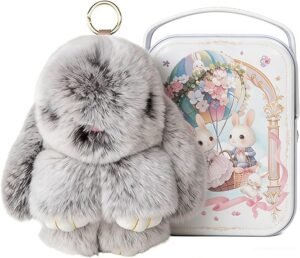
Super soft backpack stuffy
I love the texture of this one. It’s a sweet, calming decoration.
Lots of colors to choose from!
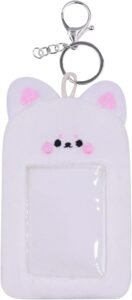
Photo Holder
Place a picture in an adorable plush holder for your little to look at when they are missing home.
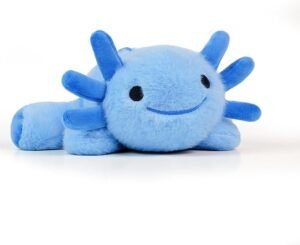
Small Encouraging Stuffy
This one is small enough to live in the backpack as long as he doesn’t disrupt the class. That smile is comforting all by itself. Comes in lots of colors.
(If separation anxiety at drop-off is the bigger thing you’re navigating right now, I’ve written a full post on that here: Preschool Drop-Off Tips: Why a Quick Goodbye Helps Your Child Thrive.)
What This Looks Like by Grade
Preschool: Focus on independence basics — putting on and taking off their own shoes (Velcro is so helpful here!), putting on a sweater or coat (zipping comes with practice, but let them attempt it themselves), opening their own lunch containers and water bottles, and recognizing their own name (starting with just the first letter is a great entry point). It’s okay if they struggle at first — they need the chance to practice. Confidence with these small tasks matters more than academic prep.
Kindergarten: This is the year to build on following multi-step directions (“get your folder, put it in your backpack, put on your coat”) — structure really kicks in now. They can help get their backpack ready the night before, or put their lunch in their bag in the morning. You may still want to double-check, but you’re giving them real opportunities to take ownership of their day.
First Grade: Kids can generally handle more supply organization themselves — a simple system (folder colors, labeled pencil pouch) goes a long way toward independence. (Still worth a quick check, though!)
One thing to remember: the independence skills don’t just belong to preschool. I’ve had plenty of Kindergarten and 1st grade students who still struggled with zipping a coat or tying shoes, and that’s okay. Every child is different, some coats are just harder to zip, and tying shoes is genuinely a whole skill on its own — not something every child masters on the same timeline. If your older child is still working on something from the preschool list, that’s completely normal — keep practicing, no matter the grade.
The One Thing Worth Practicing Most
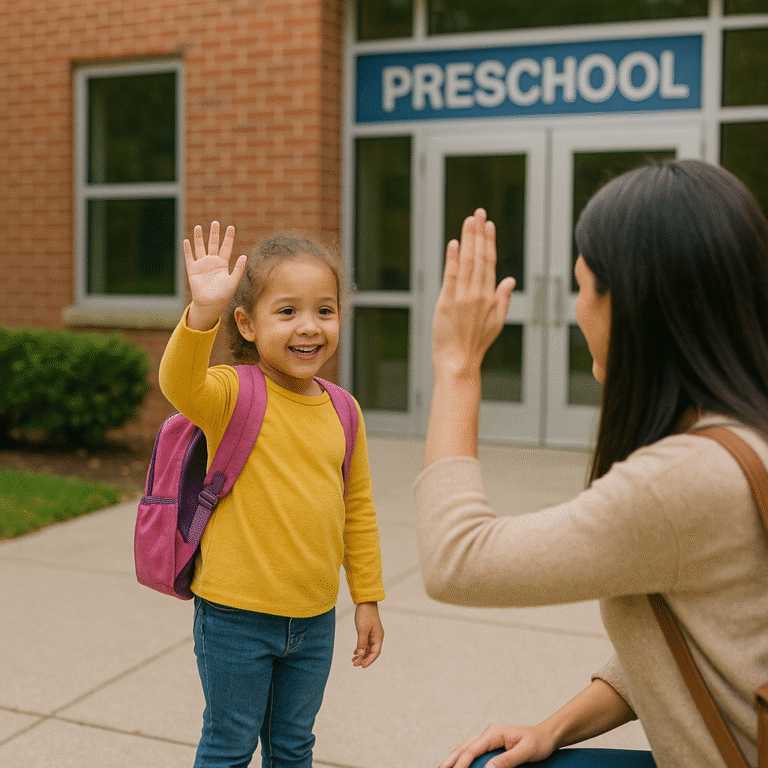
If you only do one “readiness” thing before the first day, work on the goodbye. Practice a short, confident, predictable goodbye routine (a specific phrase, a specific hug-then-go). Kids take their emotional cues from you more than almost anything else in that moment.
Practice this the next time you drop your littles at Grandma’s house or with a good friend. Leave — even if it’s only for a grocery run or a walk around the block — then come back and pick them up with real excitement to see them.
Those first few minutes of reconnection matter more than people realize. (More on how to actually connect after school — and what to ask instead of “how was your day?” — coming in a future post.)
If you’re heading into those first few weeks and want a little more support, grab your free activity here to keep exploring with your little one this summer. And if separation anxiety at drop-off is the bigger thing on your mind, take a look at Preschool Drop-Off Tips: Why a Quick Goodbye Helps Your Child Thrive.